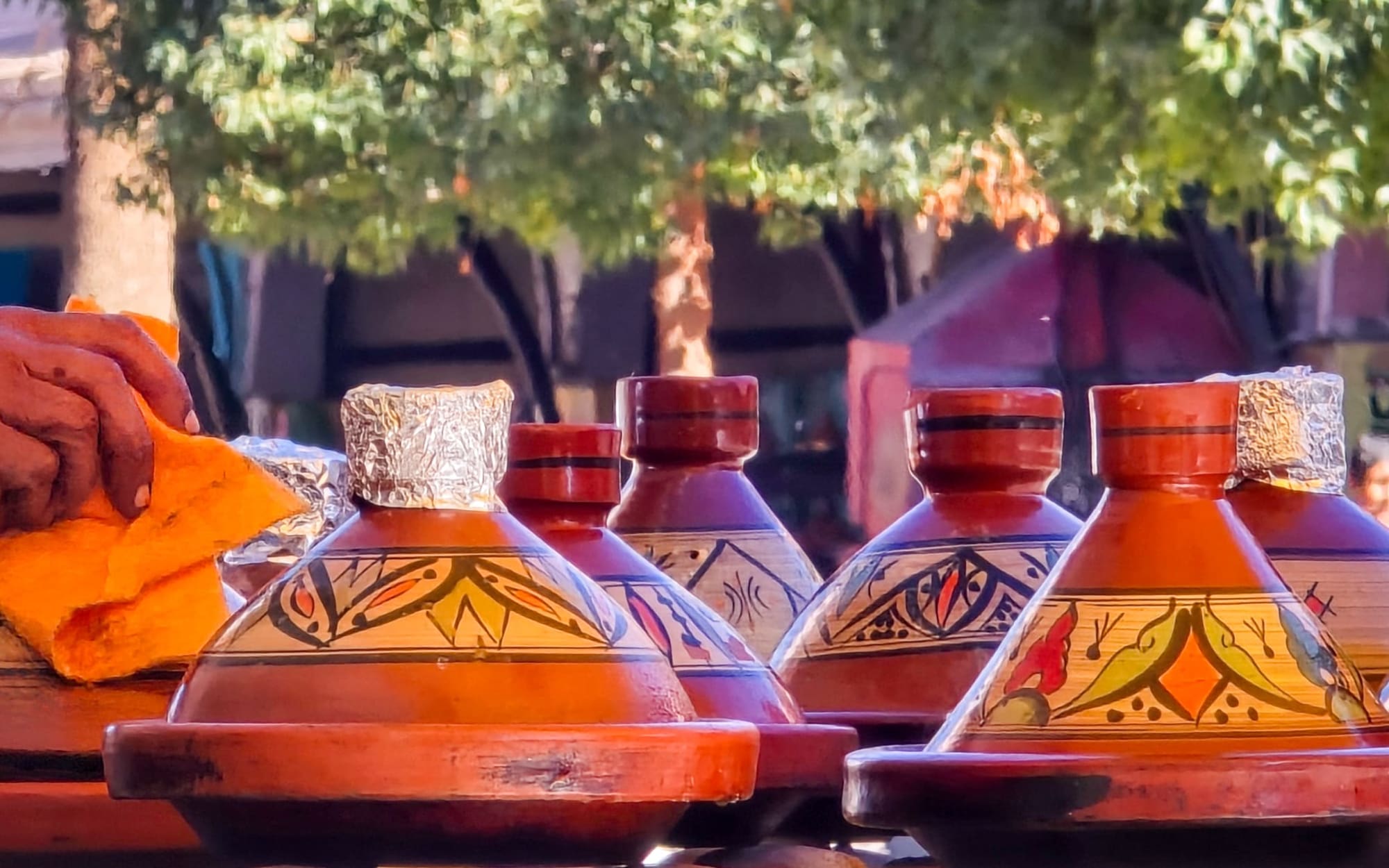
Two thousand years, still standing
Morocco holds the largest Jewish heritage in the Arab world — mellahs, synagogues, cemeteries and stories still cared for today. These journeys are built around them, privately and at your own pace.
Jews lived in Morocco for more than two millennia, and at the middle of the last century the community numbered in the hundreds of thousands. Most left; the places did not. Synagogues in Fes, Marrakech, Casablanca and Essaouira are restored and open, the mellahs are living quarters again, and the cemeteries are maintained, visited and documented.
For many of our guests this is not sightseeing. It is a grandparent’s town, a family name on a register, a cemetery they have been meaning to visit for thirty years. We plan those days quietly and without an audience, and we allow far more time than a standard tour would.
Jaouad is Amazigh, born in the High Atlas, licensed by Morocco’s Ministry of Tourism, and has guided Jewish families from the United States, Britain, France, Israel and Australia since 2018. Where a specialist local guide or a community contact is the right person for a particular site, he arranges it.
The heart of Jewish Morocco
Any of these can be a morning, a full day, or the reason the whole route is built the way it is.
Casablanca
The Museum of Moroccan Judaism — the only Jewish museum in the Arab world — plus Beth-El and Temple Em Habanim, and the Jewish cemetery.
Fes
The oldest mellah in Morocco, the restored Ibn Danan synagogue, the hillside cemetery with the tomb of Solica, and streets where the balconies still face the quarter.
Marrakech
The mellah beside the Bahia Palace, Slat al-Azama synagogue and its courtyard, the Miaara cemetery, and spice and jewellery souks that were Jewish trades for centuries.
Essaouira
Once a majority-Jewish port. The Haim Pinto synagogue and house, the two cemeteries by the sea, and the Bayt Dakira heritage house.
Meknes, Sefrou and Debdou
Smaller communities with deep roots, often where family records lead. Quiet, moving and rarely visited by groups.
Ouarzazate and the south
Mountain and desert villages with Jewish quarters, saints’ tombs and the remains of trading routes towards the Sahara.
Respectfully, and on your terms
Tell us what matters and the week is built around it. Nothing here is a fixed package.
Family research
Send us the town, the family name, or an old photograph. We contact caretakers and community associations in advance so a visit is expected rather than improvised.
Shabbat
If you observe, the itinerary stops. We plan driving, check-in and meals around it, and stay within walking distance of a synagogue where that matters.
Kosher meals
Kosher catering is available in Casablanca and Marrakech and can be arranged elsewhere with notice. Tell us your standard and we will tell you honestly what is possible on each part of the route.
Cemeteries
We arrange access, a caretaker where needed, and the time to sit. Records are often kept on paper; give us the names early and we start looking before you arrive.
Alongside the rest of Morocco
Most guests combine heritage days with the Sahara, the Atlas and the medinas. The two sit together comfortably in ten to fourteen days.
Groups and families
Private vehicles for two to fourteen, multi-generation trips, bar and bat mitzvah journeys, and community groups with their own rabbi or scholar.
Jewish heritage travel in Morocco — your questions
What families ask us before planning this kind of journey.
Tell us your dates, we'll do the rest.
Jaouad reads every enquiry himself and replies within 24 hours — with a first outline, honest advice, and no obligation.