Morocco, nine hoursfrom home.
A country that rewards the long flight
Every year we guide Americans who arrive expecting a desert postcard and leave talking about the people. Here is everything worth knowing from the US side, before you book anything.
Genuine Discoveries is not an agency reselling someone else’s coach tour. Jaouad — born in a High Atlas village, licensed by Morocco’s Ministry of Tourism — designs and guides the journey himself. From 4,000 miles away that matters: one person answers your email, meets you at arrivals, and is still with you on the last day.
Most American travellers come for ten to fourteen days, combine the imperial cities with the Sahara, and want the jet lag handled rather than ignored. Every itinerary opens with an easy first day for exactly that reason: a slow walk, an early dinner, no schedule.
Below: the flights that work, what you need on paper, when to come, and what a private journey actually costs — written plainly, because most of the Morocco pages you have read this week were not.
Flights from the US
Morocco is one of the shortest long-haul flights from the American East Coast — closer than most of Europe.
Nonstop from New York
Royal Air Maroc flies JFK to Casablanca in roughly seven hours, usually overnight, landing mid-morning. Washington Dulles and Miami have also been served nonstop, and routes keep being added — check current schedules when you fix dates.
One stop from anywhere else
From Chicago, Dallas, Los Angeles, San Francisco or Atlanta, connect once through Casablanca, Paris, Madrid, Lisbon, London, Doha or Istanbul. Door to door is usually 14 to 20 hours.
Which airport to land at
Casablanca (CMN) is the main gateway and the start of the Grand Discovery. Marrakech (RAK) suits desert and Atlas routes. Fes (FEZ) or Tangier (TNG) work well if you want to travel north to south and fly home from Marrakech.
The time difference
Morocco runs on UTC+1 all year: five hours ahead of New York, eight ahead of Los Angeles. Flying east costs you a night; flying home you get it back.
Six journeys, all of them yours to change
These are the routes we run most often. Every one is private, and every one gets rebuilt around your dates, your pace and your interests.
The Grand Discovery
Casablanca to Marrakech the long way: Chefchaouen, Roman Volubilis, Fes, two nights in the Erg Chebbi dunes, the Dades valley and three unhurried days in Marrakech.
From $4,450 per person · quoted in USD 8 daysColors of Morocco
The classic first trip — blue Chefchaouen, medieval Fes, the Sahara and the red city, at a pace that still leaves room to sit down.
From $1,890 per person · quoted in USD 8 daysImperial Cities & Desert Magic
Rabat, Meknes, Fes and Marrakech — a thousand years of palaces, medinas and craft, with the dunes at the centre of the week.
From $1,890 per person · quoted in USD 9 daysMgoun Trek & Atlas Mountains
Summit Jebel Mgoun, walk the Happy Valley, sleep in Amazigh villages and finish at the Ouzoud waterfalls.
From $1,000 per person · quoted in USD 5 daysToubkal Trek & Atlas Mountains
North Africa’s highest peak in a long weekend, with mountain refuges, mule support and a guide who grew up on these trails.
From $1,000 per person · quoted in USD 5 daysSahara Escape
Straight to the desert: Aït Benhaddou, the Dades gorges and two nights under the stars at Erg Chebbi.
From $990 per person · quoted in USDPrices start here — the rest is your choice
Nobody can quote a Morocco trip honestly without knowing how you want to sleep. So we publish the floor, and explain exactly what lifts it.
What sets the starting price
Every journey shows a "from" price: the lowest it runs at, in a quiet month, with two or more of you sharing, staying in characterful riads and guesthouses. It is a real number, not bait — trips do leave at it.
What moves it up
Three things, in order: the standard of the houses you sleep in, the season you travel in, and how many of you there are. A five-star riad in Fes and a luxury desert camp can double the room cost of a week without changing a single stop on the map.
The Journey
Our standard level. Characterful riads and guesthouses chosen for their owners as much as their rooms, a comfortable private 4×4, and the same guiding as every other trip.
The Journey, Elevated
Five-star riads, palace hotels, luxury desert camps with proper beds and private bathrooms, a larger vehicle, and extras like a private cooking lesson or a hot-air balloon at dawn.
A private Morocco journey costs more per day than a coach tour and less than most Americans expect. You are paying for exclusivity: your own vehicle and driver, your own guide, and an itinerary that changes when you want it to.
Flights are not included — book your own so you keep the miles and the flexibility. Travel insurance is yours too, and worth having. Everything else in the written quote is the total: no resort fees, no surprise "local payments", no optional excursions sold to you in the car.
You will get that quote, itemised, before anything is confirmed, and no deposit is taken while the itinerary is still being designed.
Six places worth the flight
A private journey means you can take any of these slowly, or leave one out entirely.
Marrakech
The Jemaa el-Fnaa at dusk, the Saadian Tombs, Majorelle, and the quiet courtyards five metres off a street you would never have entered alone.
Fes
The oldest living medieval city on earth: 9,000 lanes, no cars, tanneries, and the world’s oldest continuously operating university.
The Sahara
Erg Chebbi’s dunes at Merzouga — camels at sunset, dinner under more stars than you have seen, and complete silence at 3 a.m.
The High Atlas
Amazigh villages, walnut terraces, mule tracks and 4,000-metre peaks an hour from Marrakech. Jaouad’s home ground.
Chefchaouen
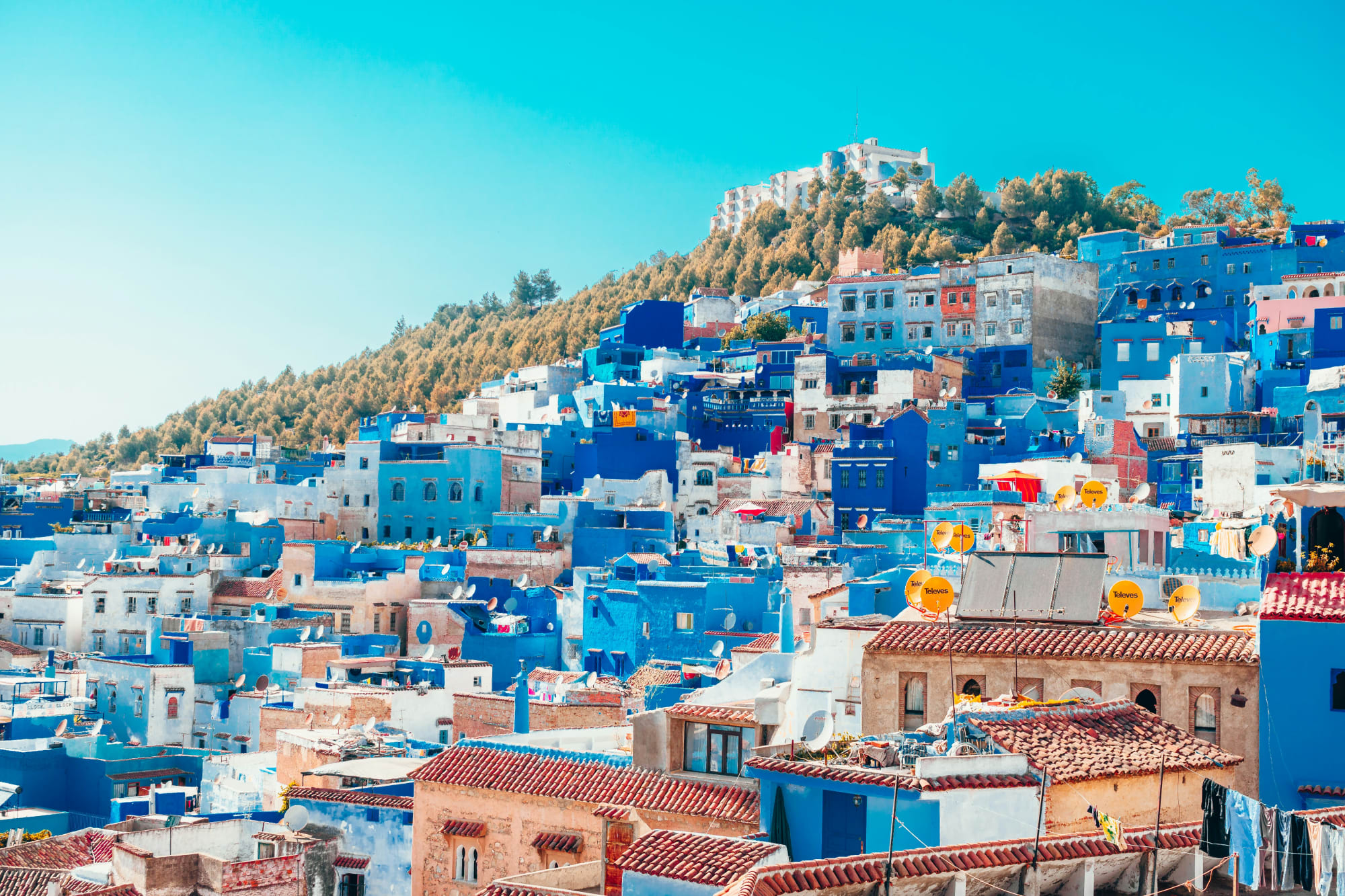
The blue city in the Rif: a full day, not the two-hour photo stop most tours allow.
The Atlantic coast
Essaouira’s ramparts and grilled sardines, Oualidia’s oyster lagoon, Taghazout’s surf — where Moroccans go to breathe.
What makes this different
There are hundreds of Morocco operators. Here is the short, checkable version of what separates us.
You get the owner, not a subcontractor
Jaouad designs your itinerary, answers your emails and guides the journey himself. On a fourteen-day trip you have the same person from arrivals to departure.
Licensed, and from here
Born in a High Atlas village, Amazigh by heritage, certified by Morocco’s Ministry of Tourism. He speaks Tamazight, Arabic, French, English and Spanish, which is what opens doors in villages.
Private, always
Your own vehicle and driver, your own guide, your own pace. Nothing is shared with strangers and nothing runs to someone else’s clock.
No single supplement
Solo travellers pay the same per-person price as couples. Gratuities for drivers, local guides and camp staff are included too.
From first email to first morning
No forms to fight, no pressure, and nothing to pay while we are still designing.
Tell us the shape of it
Your dates, roughly how long you have, what you love and what you would rather skip. Two lines is enough to start.
A first outline, in 24 hours
You get a written day-by-day proposal with a total price — not a brochure, and nothing to pay.
We rebuild it with you
Swap a day, add the coast, slow the pace, upgrade one riad and not the others. Most journeys go through two or three versions.
Confirm, then relax
Deposit and payment terms in writing, then Jaouad handles the rest: houses, drivers, permits, the local guide in each city.
Visas, money and the small print
Nothing here is complicated, but knowing it in advance saves a bad first hour.
No visa for US passports
Americans may enter for tourism for up to 90 days without a visa; passports should be valid at least six months beyond arrival. Rules change — confirm on travel.state.gov or with the Moroccan consulate before booking.
The dirham is a closed currency
You cannot buy dirhams at home and should not carry them out. Withdraw at the airport ATM on arrival. Cards work in riads and better restaurants; cash rules in souks and villages.
Tipping, honestly
Gratuities for your driver, local city guides and camp staff are already included in our journeys, so you never have to guess. Small change for café waiters and porters is normal.
Phones, data and power
A US eSIM or a local Maroc Telecom or Orange SIM costs a few dollars a week; wifi is standard in riads. Sockets are European two-pin at 220V, so bring an adapter.
Health
No vaccinations are required for entry. Check current CDC guidance, drink bottled water, and tell us about any allergies or dietary needs — every kitchen on your route will know before you arrive.
Safety, realistically
Tourism is a pillar of the economy and visitors are treated accordingly. Pickpocketing in crowded medinas is the real risk, not anything dramatic. Read the current State Department advisory for the official position.
The months that suit American calendars
Morocco has four climates stacked close together, so the right month depends on where you go, not only when you can travel.
Spring break (March–April)
The best all-round window: wildflowers in the Atlas, comfortable desert nights, cities not yet hot. It fills early — plan four to six months ahead.
Memorial Day to July 4th
Fine for the coast, the Atlas and the north. Inland cities and the Sahara get genuinely hot from late June, so we shift the route towards altitude and the Atlantic.
September to November
Our favourite. Summer crowds gone, warm days, cool desert evenings, olive and date harvests in the valleys. Thanksgiving week is an excellent time to be in Fes.
December and January
Bright, crisp and quiet, with snow on the High Atlas and empty medinas. Bring a jacket: the Sahara is cold after dark. Christmas and New Year book out months ahead.
Morocco from the USA — your questions
What American travellers actually ask us before booking.
Tell us your dates, we'll do the rest.
Jaouad reads every enquiry himself and replies within 24 hours — with a first outline, honest advice on timing, and no obligation.