A long way to come.Worth every hour.
Make the distance count
Nobody flies twenty-four hours for a checklist. Australians who come to Morocco stay longer, travel deeper, and want the trip designed by someone who lives here.
Our Australian guests usually take two to three weeks and pair Morocco with a stopover in the Gulf or a few days in Europe. That length suits the country: fourteen days lets you cross from the Atlantic to the Sahara without a single day that exists only to get somewhere.
Jaouad — born in a High Atlas village, licensed by Morocco’s Ministry of Tourism — designs and guides every journey himself. From the other side of the world, one accountable point of contact is worth more than any brochure.
Below: the routings that work, the stopover that removes the jet lag, when to come given your seasons, and what a private journey costs.
Routes from Australia and New Zealand
There is no direct flight — but there are three good ways to do it, and one of them turns the journey into part of the holiday.
Via the Gulf
Qatar Airways through Doha, Emirates through Dubai and Etihad through Abu Dhabi all connect to Casablanca or Marrakech. Roughly 24 to 28 hours from Sydney or Melbourne with one stop.
Via Europe
Through London, Paris, Madrid or Istanbul, with a short hop to Marrakech, Fes or Tangier. Often the cheapest, and the easiest to break with a few nights in Europe.
Build in a stopover
The travellers who enjoy Morocco most are the ones who slept somewhere on the way. Two nights in Doha, Dubai or Istanbul costs little and removes the worst of the jet lag before your first Moroccan morning.
The time difference
Morocco is on UTC+1 all year — about nine hours behind eastern Australia, ten during your daylight saving. Your morning is our late evening, which is when we answer WhatsApp.
Six journeys, all of them yours to change
These are the routes we run most often. Every one is private, and every one gets rebuilt around your dates, your pace and your interests.
The Grand Discovery
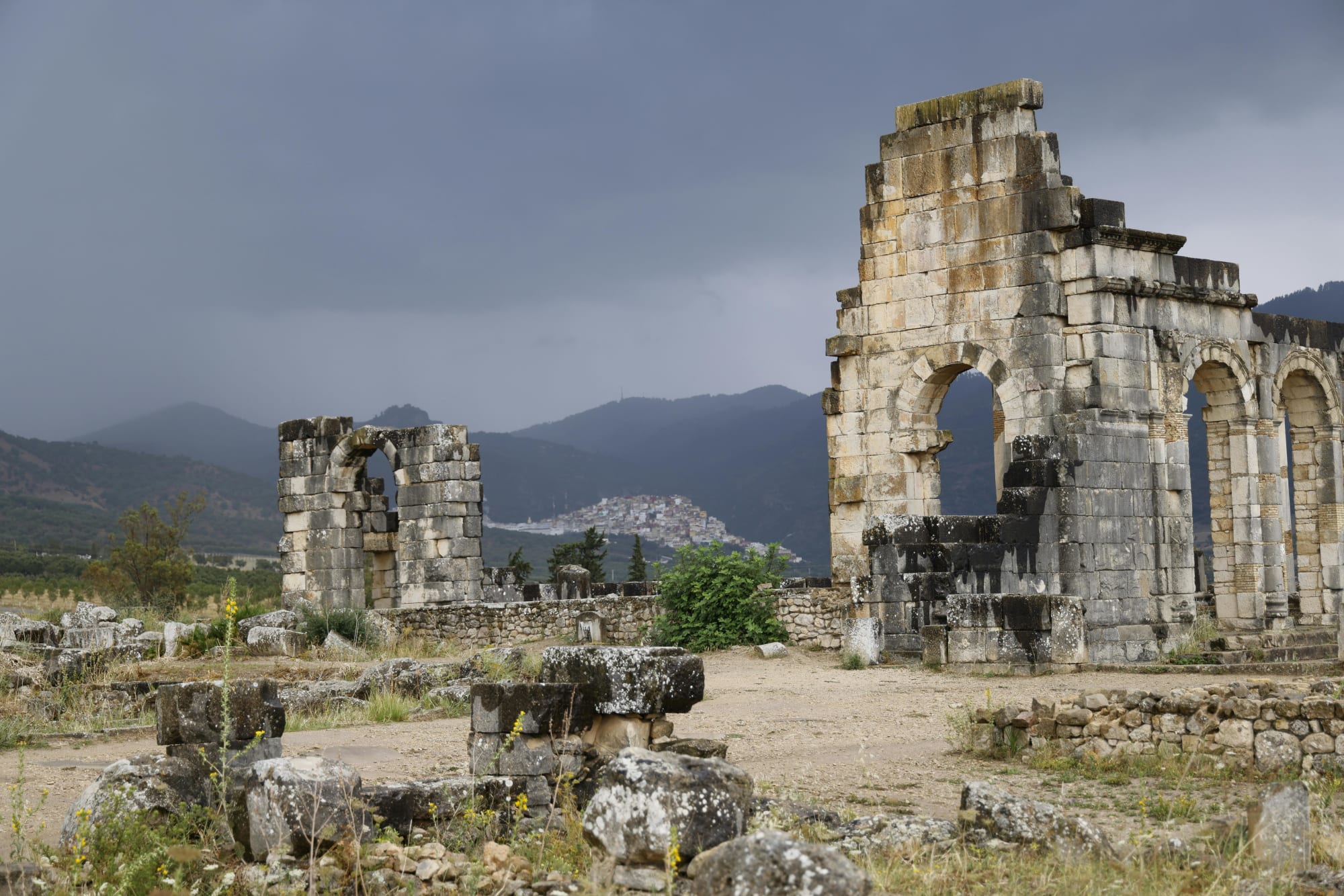
Casablanca to Marrakech the long way: Chefchaouen, Roman Volubilis, Fes, two nights in the Erg Chebbi dunes, the Dades valley and three unhurried days in Marrakech.
From $4,450 per person · quoted in USD 8 daysColors of Morocco
The classic first trip — blue Chefchaouen, medieval Fes, the Sahara and the red city, at a pace that still leaves room to sit down.
From $1,890 per person · quoted in USD 8 daysImperial Cities & Desert Magic
Rabat, Meknes, Fes and Marrakech — a thousand years of palaces, medinas and craft, with the dunes at the centre of the week.
From $1,890 per person · quoted in USD 9 daysMgoun Trek & Atlas Mountains
Summit Jebel Mgoun, walk the Happy Valley, sleep in Amazigh villages and finish at the Ouzoud waterfalls.
From $1,000 per person · quoted in USD 5 daysToubkal Trek & Atlas Mountains
North Africa’s highest peak in a long weekend, with mountain refuges, mule support and a guide who grew up on these trails.
From $1,000 per person · quoted in USD 5 daysSahara Escape
Straight to the desert: Aït Benhaddou, the Dades gorges and two nights under the stars at Erg Chebbi.
From $990 per person · quoted in USDPrices start here — the rest is your choice
Nobody can quote a Morocco trip honestly without knowing how you want to sleep. So we publish the floor, and explain exactly what lifts it.
What sets the starting price
Every journey shows a "from" price: the lowest it runs at, in a quiet month, with two or more of you sharing, staying in characterful riads and guesthouses. It is a real number, not bait — trips do leave at it.
What moves it up
Three things, in order: the standard of the houses you sleep in, the season you travel in, and how many of you there are. A five-star riad in Fes and a luxury desert camp can double the room cost of a week without changing a single stop on the map.
The Journey
Our standard level. Characterful riads and guesthouses chosen for their owners as much as their rooms, a comfortable private 4×4, and the same guiding as every other trip.
The Journey, Elevated
Five-star riads, palace hotels, luxury desert camps with proper beds and private bathrooms, a larger vehicle, and extras like a private cooking lesson or a hot-air balloon at dawn.
Given what it costs to get here, most Australian travellers choose the longer routes and value the fact that nothing in them is shared: your own 4×4, your own guide, your own pace. As a rough guide, our journeys work out around A$2,800 to A$6,800 per person depending on length and standard.
Flights and insurance are not included — book them yourself so you keep the airline points and can build the stopover you want. Everything in the written quote is the total, gratuities included.
We are happy to talk it through on a call at an hour that suits Australian time, and nothing is charged while the itinerary is still being designed.
Six places worth the flight
A private journey means you can take any of these slowly, or leave one out entirely.
Marrakech
The Jemaa el-Fnaa at dusk, the Saadian Tombs, Majorelle, and the quiet courtyards five metres off a street you would never have entered alone.
Fes
The oldest living medieval city on earth: 9,000 lanes, no cars, tanneries, and the world’s oldest continuously operating university.
The Sahara
Erg Chebbi’s dunes at Merzouga — camels at sunset, dinner under more stars than you have seen, and complete silence at 3 a.m.
The High Atlas
Amazigh villages, walnut terraces, mule tracks and 4,000-metre peaks an hour from Marrakech. Jaouad’s home ground.
Chefchaouen
The blue city in the Rif: a full day, not the two-hour photo stop most tours allow.
The Atlantic coast
Essaouira’s ramparts and grilled sardines, Oualidia’s oyster lagoon, Taghazout’s surf — where Moroccans go to breathe.
What makes this different
There are hundreds of Morocco operators. Here is the short, checkable version of what separates us.
You get the owner, not a subcontractor
Jaouad designs your itinerary, answers your emails and guides the journey himself. On a fourteen-day trip you have the same person from arrivals to departure.
Licensed, and from here
Born in a High Atlas village, Amazigh by heritage, certified by Morocco’s Ministry of Tourism. He speaks Tamazight, Arabic, French, English and Spanish, which is what opens doors in villages.
Private, always
Your own vehicle and driver, your own guide, your own pace. Nothing is shared with strangers and nothing runs to someone else’s clock.
No single supplement
Solo travellers pay the same per-person price as couples. Gratuities for drivers, local guides and camp staff are included too.
From first email to first morning
No forms to fight, no pressure, and nothing to pay while we are still designing.
Tell us the shape of it
Your dates, roughly how long you have, what you love and what you would rather skip. Two lines is enough to start.
A first outline, in 24 hours
You get a written day-by-day proposal with a total price — not a brochure, and nothing to pay.
We rebuild it with you
Swap a day, add the coast, slow the pace, upgrade one riad and not the others. Most journeys go through two or three versions.
Confirm, then relax
Deposit and payment terms in writing, then Jaouad handles the rest: houses, drivers, permits, the local guide in each city.
Visas, money and the small print
Simple rules, a few Moroccan quirks.
No visa for Australian passports
Australians and New Zealanders can enter for tourism for up to 90 days without a visa; six months’ passport validity is the standard requirement. Check Smartraveller and the Moroccan consulate before booking.
The dirham is a closed currency
You cannot buy it at home. Withdraw at the airport on arrival and keep small notes for tips and markets. Cards are accepted in riads and better restaurants, rarely in the souks.
What is included
Your own vehicle, driver and guide, the accommodation and listed meals, and all gratuities for drivers, local guides and camp staff.
Phones and power
An eSIM or local SIM costs a few dollars and works everywhere you will be. Sockets are European two-pin at 220V. Wifi is standard in riads and patchy in the desert camp — which most people end up grateful for.
Health
No vaccinations are required for entry; check Smartraveller and your GP for current advice. Tell us about allergies and diets and every kitchen on the route will know before you arrive.
Safety, realistically
Morocco is a safe destination for visitors; the practical risks are pickpocketing in crowded places and tourist pricing, both of which largely disappear when you are with a local guide.
The months that suit Australian calendars
Morocco’s seasons mirror yours, which works out better than most people expect.
Your autumn (March–May)
Morocco’s finest spring: wildflowers in the Atlas, warm days, cool desert nights. Ideal if you can travel before the northern summer.
Your winter (June–August)
Peak northern summer. Inland is hot, so we route through the Atlas valleys, the Atlantic coast and the north, and start days early. Good for school-holiday families who want the coast.
Your spring (September–November)
Our favourite window and perfect for a long trip: warm, quiet, harvest season, cool desert evenings. This is when we would come if we were flying from Sydney.
Your summer (December–February)
Bright, crisp and uncrowded, with snow on the High Atlas. Christmas and New Year book out early; January is one of the best-value months of the year.
Morocco from Australia — your questions
What Australian and New Zealand travellers ask before they book.
Tell us your dates, we'll do the rest.
Jaouad reads every enquiry himself and replies within 24 hours — with a first outline, honest advice on timing, and no obligation.